Salts left by water moving through the brick. Moisture is getting in.
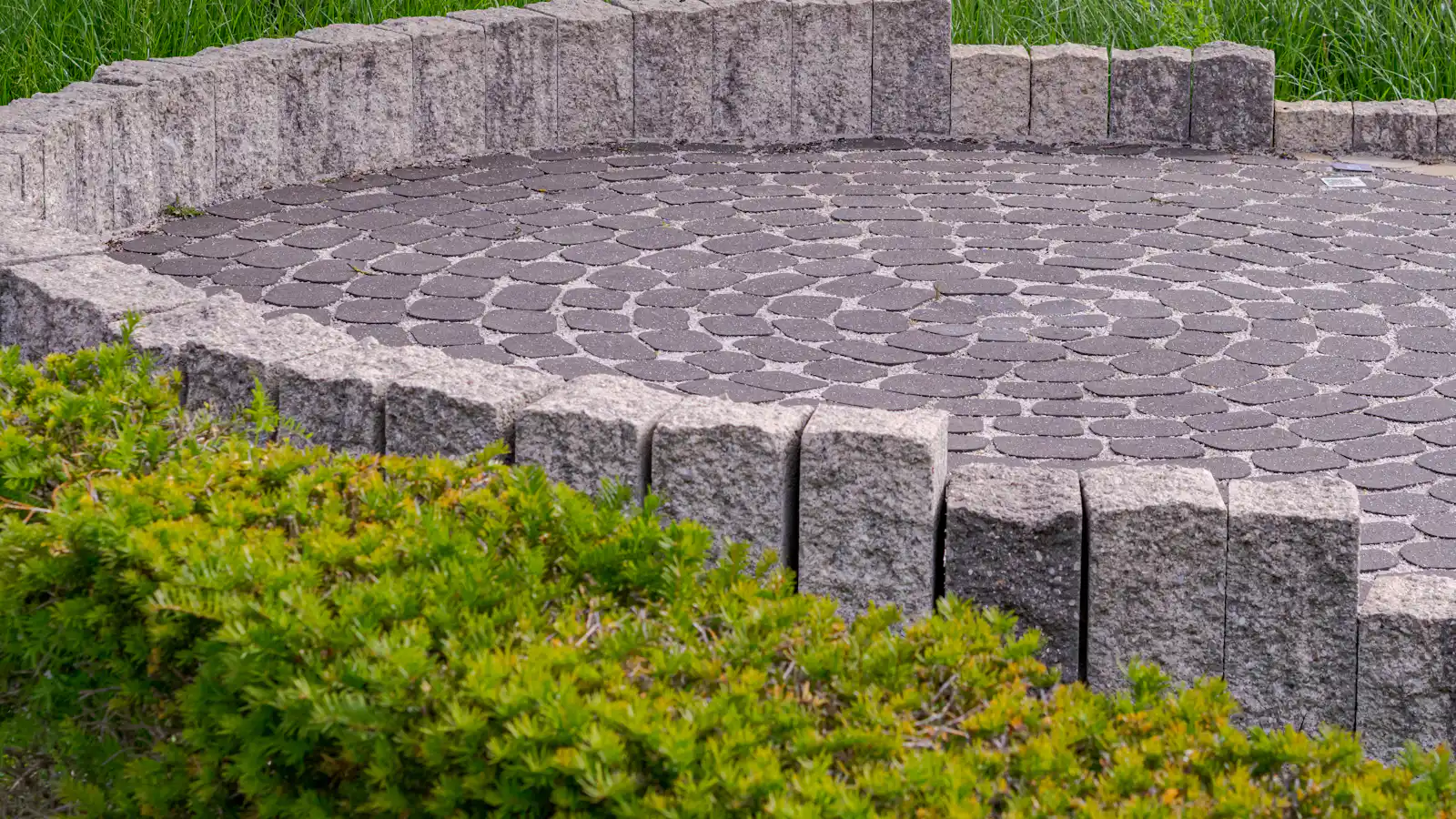
Pavers and patios in New York City
Patios, walkways and driveways laid on a solid base, so they stay flat.
- Licensed & insured
- Free estimates
- Best time: Spring to fall
Pavers look good and handle freeze–thaw winters well, because each one can move a little without cracking. But they are only as good as what is underneath. A thin or soft base is why pavers sink, rock and pull apart over time.
We dig out to the right depth, build and compact a gravel base, screed a bedding layer and lay the pavers to a slope that drains. Edges are locked in and joints are filled with sand. We also lift and reset pavers that have sunk.
Signs it’s time
- Sunken or rocking pavers
- Weeds in the joints
- Puddles after rain
- Edges spreading apart
Watch the fix.
How a pavers & patios job goes, from first stroke to finished. Drag across the picture to scrub through it.
Get a free estimateBefore
Done right, start to finish.
Digging out
Old surface and soil removed to the depth the base needs.
Compacted base
Crushed stone spread and compacted in layers, so the surface stays level.
Bedding layer
A smooth, even layer the pavers sit on, set to the right slope.
Laying the pavers
Pavers laid in the pattern you choose, with clean cuts at the edges.
Edge restraint
Edging that locks the pavers in, so they don't drift or spread.
Joint sand
Sand swept into the joints and compacted to lock the surface together.
Six signs worth a call.
Tap a card to see what it means.
Water froze inside the brick and popped its face off.
A crack stepping along the joints. Often movement, so get it looked at.
Mortar worn back from the brick. If a coin fits in the gap, it’s time.
Moss and algae hold water against the wall and make steps slippery.
Water stuck behind paint or stucco pushes it off the wall.
How the job goes.
- 01
Plan the layout
We measure, talk through layout and pattern, and plan where water will drain.
- 02
Dig and build base
The area is dug out, then the base is built up and compacted.
- 03
Lay and cut
Pavers go down on the bedding layer, with edges cut and restrained.
- 04
Sand and compact
Joints are filled with sand, the surface is compacted, and we clean up.
What customers say.
They laid a paver walkway and small patio in the front yard. It's level, it drains well after rain and the pattern came out exactly like the drawing they showed us.
The mortar on our front wall was crumbling and we had damp spots inside. They raked it all out, repointed the whole front and matched the color to the old brick. You honestly can't tell where they started.
We had a leak over the top-floor bedroom that two other people couldn't find. They went up, traced it back to the flashing around the chimney and fixed it properly. Dry through every storm since.
Good to know.
More answers on the FAQ page, or just call.
Why are my pavers sinking?
Usually the base. If it was too thin, not compacted or washed out by water, pavers settle unevenly. We lift the sunken area, rebuild the base and relay the same pavers where they are still good.
Can you reuse my existing pavers?
Often, yes. Pavers in good shape can be lifted, cleaned up and relaid on a new base. Cracked or broken ones get replaced with the closest match we can find.
How do I keep weeds out of the joints?
Weeds grow where joint sand has washed out, so keeping the joints full helps a lot. Polymeric sand, which hardens once it gets wet, can also help keep weeds and washout down.
Pavers or concrete: which is better?
Both work. Pavers can be lifted and reset in sections and come in many looks. Concrete makes a single, plain surface with fewer joints. We'll talk through what fits your space.
Will a paver patio drain properly?
It will if the base is built with the right slope. We plan the surface so water runs away from the house and off the patio or walkway, not into it.
Often done together.
Let’s look at your home.
Call or text us directly, 7 days a week, 8am to 8pm. Photos help us give you a rough idea before we visit.
929-289-7262