Salts left by water moving through the brick. Moisture is getting in.
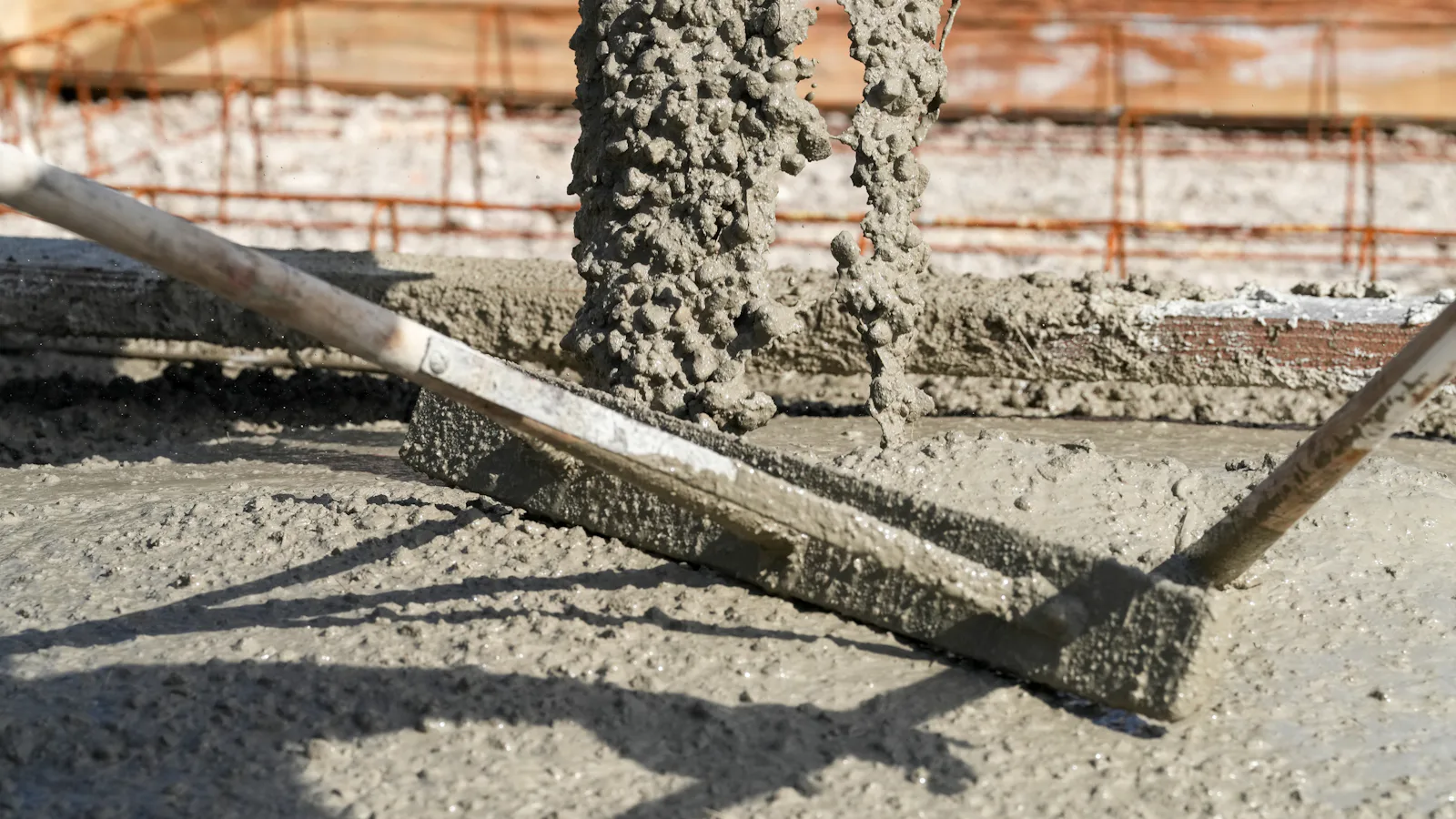
Concrete work in New York City
Slabs, patios, driveways and foundations, poured and finished level.
- Licensed & insured
- Free estimates
- Best time: Late spring and summer
Concrete in New York has a hard life. Water gets into small cracks, freezes and widens them. Road salt eats at the surface. Slabs settle, heave or tilt toward the house, and water pools where it shouldn't.
We break out failed concrete, prepare a compacted base and pour new slabs, patios, driveways and foundations. Each pour is shaped to drain away from the house, finished for grip and given time to cure before it takes traffic. Where a repair will do, we'll say so.
Signs it’s time
- Wide or growing cracks
- Heaving or sunken slabs
- Water pooling near walls
- Crumbling, flaking surface
Watch the fix.
How a concrete work job goes, from first stroke to finished. Drag across the picture to scrub through it.
Get a free estimateBefore
Done right, start to finish.
Break out and removal
Cracked or sunken concrete broken out and removed from the site.
Base preparation
A compacted base underneath, so the new slab doesn't settle.
Forms and reinforcement
Forms set to the right height and slope, with reinforcement where the job needs it.
Pour and finish
Concrete placed, leveled and finished smooth or with a non-slip texture.
Control joints
Joints cut in so cracks form along clean lines instead of across the slab.
Curing time
The new concrete is protected while it cures, before it takes foot or car traffic.
Six signs worth a call.
Tap a card to see what it means.
Water froze inside the brick and popped its face off.
A crack stepping along the joints. Often movement, so get it looked at.
Mortar worn back from the brick. If a coin fits in the gap, it’s time.
Moss and algae hold water against the wall and make steps slippery.
Water stuck behind paint or stucco pushes it off the wall.
How the job goes.
- 01
Measure and plan
We check the area, drainage and slope, and plan the right thickness.
- 02
Prepare the base
Old concrete comes out, the ground is compacted and forms are set.
- 03
Pour and level
Concrete is placed, leveled, finished and jointed while it is still workable.
- 04
Cure and clean
We keep the slab protected while it cures, then clean up the site.
What customers say.
They poured a new slab for our backyard patio. Everything was level, the edges were clean and they explained each step before they did it. Very easy people to deal with.
The mortar on our front wall was crumbling and we had damp spots inside. They raked it all out, repointed the whole front and matched the color to the old brick. You honestly can't tell where they started.
We had a leak over the top-floor bedroom that two other people couldn't find. They went up, traced it back to the flashing around the chimney and fixed it properly. Dry through every storm since.
Good to know.
More answers on the FAQ page, or just call.
How long before I can walk or drive on new concrete?
It depends on the mix and the weather. Foot traffic usually comes first, often after a day or two. Cars need longer, often about a week. We'll tell you what applies to your job.
Why does concrete crack?
Almost all concrete cracks a little as it dries and shrinks. Control joints help those cracks form in straight lines where they don't matter. Wide or growing cracks usually point to a weak base or a water problem.
Can you pour concrete in cold weather?
Concrete must not freeze while it cures. In cold months it needs protection and the right conditions, so we plan most pours for the warmer part of the year.
Should I repair or replace my slab?
Small cracks and surface wear can often be repaired. A slab that has sunk, heaved or tilted toward the house usually needs to come out and be replaced on a solid base. We'll tell you which one fits.
Why is water pooling against my house?
The slab has likely settled or was poured without enough slope. Water sitting against a wall can find its way into the foundation. A new slab pitched away from the house usually fixes it at the source.
Often done together.
Let’s look at your home.
Call or text us directly, 7 days a week, 8am to 8pm. Photos help us give you a rough idea before we visit.
929-289-7262